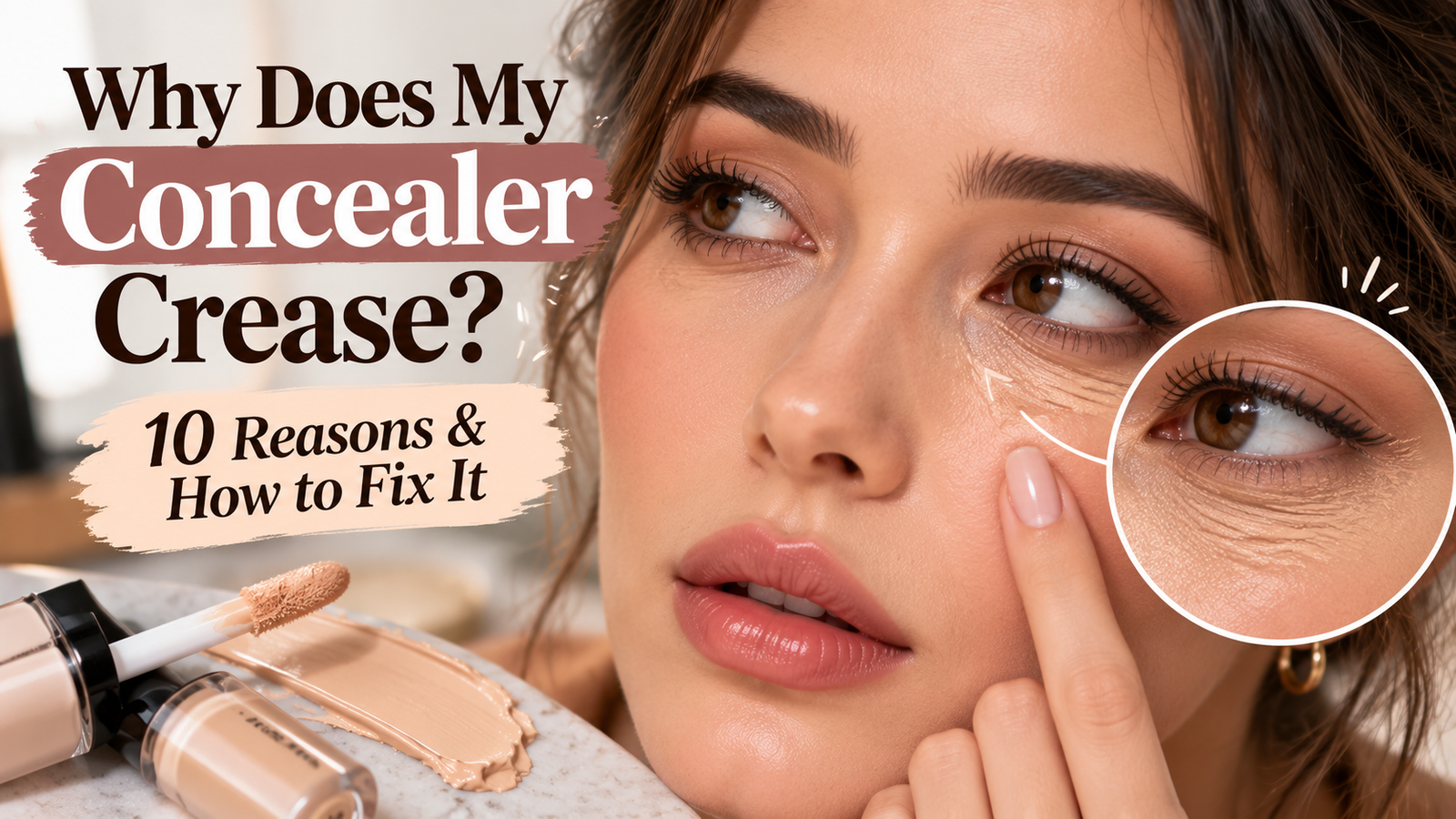
Why does my concealer crease? If you’ve ever applied concealer only to notice fine lines, cracking, or product gathering under your eyes a few hours later, you’re definitely not the only one dealing with it.
Some creasing is normal because the skin around your eyes moves whenever you smile, blink, or make facial expressions. Fine lines and natural folds can also give makeup places to settle.
However, your skincare preparation, concealer formula, application technique, and the amount of powder you use can make creasing look more noticeable.
Below are 10 common reasons your concealer may crease—and simple changes that can help create a smoother-looking finish.
1. You’re Applying Too Much Concealer
More concealer doesn’t necessarily mean better coverage.
A thick layer leaves more product sitting on the skin, which means there’s also more makeup available to collect in fine lines.
Instead of covering the entire under-eye area with a heavy triangle of concealer, start with a small amount.
Place it primarily where you actually need coverage—often near the inner corner and areas of discoloration—and blend outward.
Try this: Start with less than you think you need. You can always add another thin layer.
2. Your Under-Eye Area Is Too Dry
Dryness can make concealer look textured, patchy, or cracked.
If the skin underneath your eyes feels tight or visibly flaky, applying makeup directly over it may emphasize that texture.
Before makeup, apply a lightweight moisturizer that works well with your skin.
Give your skincare a few minutes to settle before applying concealer.
Try this: Moisturize first, but avoid applying an excessively thick layer immediately before makeup.
3. You’re Using Too Much Eye Cream
Skipping hydration can cause problems—but using too much rich skincare underneath concealer can also affect how makeup sits.
If a thick eye cream hasn’t absorbed before you apply makeup, concealer may move around more easily.
Use an appropriate amount and allow it to settle before continuing with makeup.
Try this: If your under-eye area feels slippery after skincare, give it more time before applying concealer.
4. Your Concealer Formula Doesn’t Suit Your Skin
Not every concealer behaves the same way.
Some formulas are very creamy and emollient, while others dry down quickly or have a more matte finish.
A rich formula may move more on some people, while an extremely matte formula can emphasize dryness or texture on others.
Experiment with formulas based on your skin and the finish you prefer.
Try this: If your current concealer consistently creases despite changing your technique, test a different formula before assuming your application is the problem.
5. You’re Applying Too Much Foundation Under Your Eyes
Your concealer might not be the only product creating buildup.
If you’ve already applied a full layer of foundation underneath the eyes and then add concealer on top, you may end up with more product than necessary.
That additional makeup can make settling and creasing more noticeable.
Try this: Apply less foundation around the under-eye area and let your concealer provide the coverage where needed.
If you’re unsure which complexion product you need, see our Skin Tint vs. Foundation guide.
6. You’re Not Blending Out Existing Creases Before Setting
This small step can make a noticeable difference.
After blending your concealer, look closely at the under-eye area before applying powder.
If concealer has already settled into a line, setting powder directly over it can essentially lock that crease in place.
Try this: Gently tap over any visible creases with a fingertip or makeup sponge immediately before setting.
7. You’re Using Too Much Setting Powder
Powder can help set concealer, but more isn’t always better.
A heavy layer can make the under-eye area appear dry, textured, or cakey—especially if your skin is already dry.
Instead, try using a small amount of finely milled powder.
Try this: Use a small brush or puff to press a light layer onto areas where your concealer tends to move.
8. You’re Not Setting Your Concealer
On the other hand, some creamy concealers may move more if they’re left completely unset.
If your concealer looks good initially but quickly settles into lines, experimenting with a very small amount of powder may help.
However, not everyone needs to set the entire under-eye area.
Try this: Start with powder only where creasing is most noticeable.
9. You’re Applying Concealer Too Close to Your Lower Lash Line
You don’t necessarily need concealer covering every millimeter underneath your eye.
Applying a thick layer directly against the lower lash line can create unnecessary product buildup in an area that naturally moves throughout the day.
Instead, concentrate coverage where discoloration is most visible and blend the remaining product outward.
Try this: Use targeted placement instead of covering the entire under-eye area.
10. You’re Expecting Concealer to Stay Completely Crease-Free
This is an important one.
Your under-eye skin moves constantly.
Blinking, smiling, squinting, and normal facial expressions can cause makeup to shift. Natural lines also don’t disappear simply because concealer is applied over them.
The goal should be to reduce noticeable creasing, not expect makeup to remain completely unchanged all day.
Try this: If you notice a small amount of settling later, gently tap the area with a clean fingertip rather than immediately adding more product.
How to Stop Concealer From Creasing
If you’re still wondering why does my concealer crease, simplify your routine.
Try this order:
- Apply lightweight moisturizer.
- Allow your skincare to settle.
- Use minimal foundation underneath the eyes.
- Apply a small amount of concealer where coverage is needed.
- Blend using a sponge, brush, or fingertip.
- Check for product sitting in fine lines.
- Tap out any visible creases.
- Apply a small amount of setting powder if needed.
The biggest mistake is often simply using too much product.
Thin layers usually give you more control than trying to achieve maximum coverage with one heavy application.
How Much Concealer Should You Use?
Start small.
For many people, one small dot near the inner corner and another toward the outer portion of the under-eye area can be enough to begin.
The exact amount depends on the concealer’s pigmentation and how much coverage you want.
Blend what you’ve applied before deciding whether you need more.
You can always build coverage with another thin layer.
Should You Apply Concealer Before or After Foundation?
For most traditional makeup routines, applying foundation first can help you see how much additional coverage you actually need.
You may discover that you need much less concealer than expected.
However, there’s no universal rule. Concealer-first techniques can also work depending on the products and look you’re creating.
The important part is avoiding unnecessary layers.
Should You Powder Under-Eye Concealer?
It depends.
If you have oily skin or use a creamy concealer that moves easily, a small amount of powder may help.
If your under-eye area is very dry, heavy powder can potentially emphasize texture.
Experiment with less powder first rather than immediately baking the area with a thick layer.
Why Does My Concealer Crease Even With Powder?
Powder can’t compensate for every application problem.
Your concealer may still crease if you’re:
- Applying too much concealer
- Layering too much foundation underneath
- Using an overly emollient formula
- Setting product that has already collected in lines
- Applying too much powder
- Experiencing normal movement around the eyes
Before adding more powder, try reducing the amount of complexion product underneath.
Why Does Concealer Look Cakey Under My Eyes?
Creasing and cakiness aren’t exactly the same thing.
Creasing occurs when product collects along natural folds or fine lines.
Cakey makeup usually describes makeup that appears heavy, dry, thick, or visibly layered on the skin.
You can experience both simultaneously.
If cakiness is the bigger problem, read Why Does My Makeup Look Cakey? for more troubleshooting tips.
Concealer Creasing vs. Foundation Separating
These are also different makeup problems.
Concealer creasing typically involves product collecting in lines, especially underneath the eyes.
Foundation separation can look patchy, broken apart, or uneven across larger areas of the face.
If your base makeup seems to split apart during the day, see our guide on Foundation Separating.
How to Create a Natural Under-Eye Makeup Look
You don’t necessarily need full coverage to make the under-eye area look more even.
Try applying concealer only where discoloration is most noticeable and allow some natural skin to remain visible.
Keep powder minimal and choose a finish that complements the rest of your makeup.
For more understated makeup inspiration, explore our Light Makeup Looks guide.
Frequently Asked Questions
Why does my concealer crease under my eyes?
Concealer can settle into natural lines because the under-eye area moves frequently. Applying too much product, dryness, heavy skincare, certain formulas, excess foundation, and your setting technique can make the creasing more noticeable.
How do I keep concealer from settling into fine lines?
Use thin layers, avoid unnecessary foundation underneath the eyes, blend thoroughly, tap out any existing creases before setting, and experiment with a small amount of powder.
Does setting powder stop concealer from creasing?
Setting powder may help reduce movement with some concealers, but it doesn’t guarantee a completely crease-free finish. Applying too much powder can also make the under-eye area appear dry or textured.
Why does my concealer crease immediately?
If creasing happens almost immediately, check whether you’ve applied too much product or whether concealer has settled into existing lines before you’ve set it.
Is concealer supposed to crease?
A small amount of settling can be normal because skin moves throughout the day. Makeup can’t permanently erase natural folds and fine lines.
Should I use a sponge or brush for under-eye concealer?
Both can work. A sponge can help create a thin, blended finish, while a small brush offers more precise placement. Choose whichever method gives you the finish you prefer.
Final Thoughts
If you’ve been asking why does my concealer crease, don’t assume you simply need more powder.
Start by reducing the amount of product you’re applying. Prepare the under-eye area without leaving it overly slippery, use concealer strategically, blend thoroughly, tap out existing creases, and set lightly only where necessary.
And remember that a little settling is normal. The goal is makeup that looks smooth and comfortable—not an under-eye area that never moves.