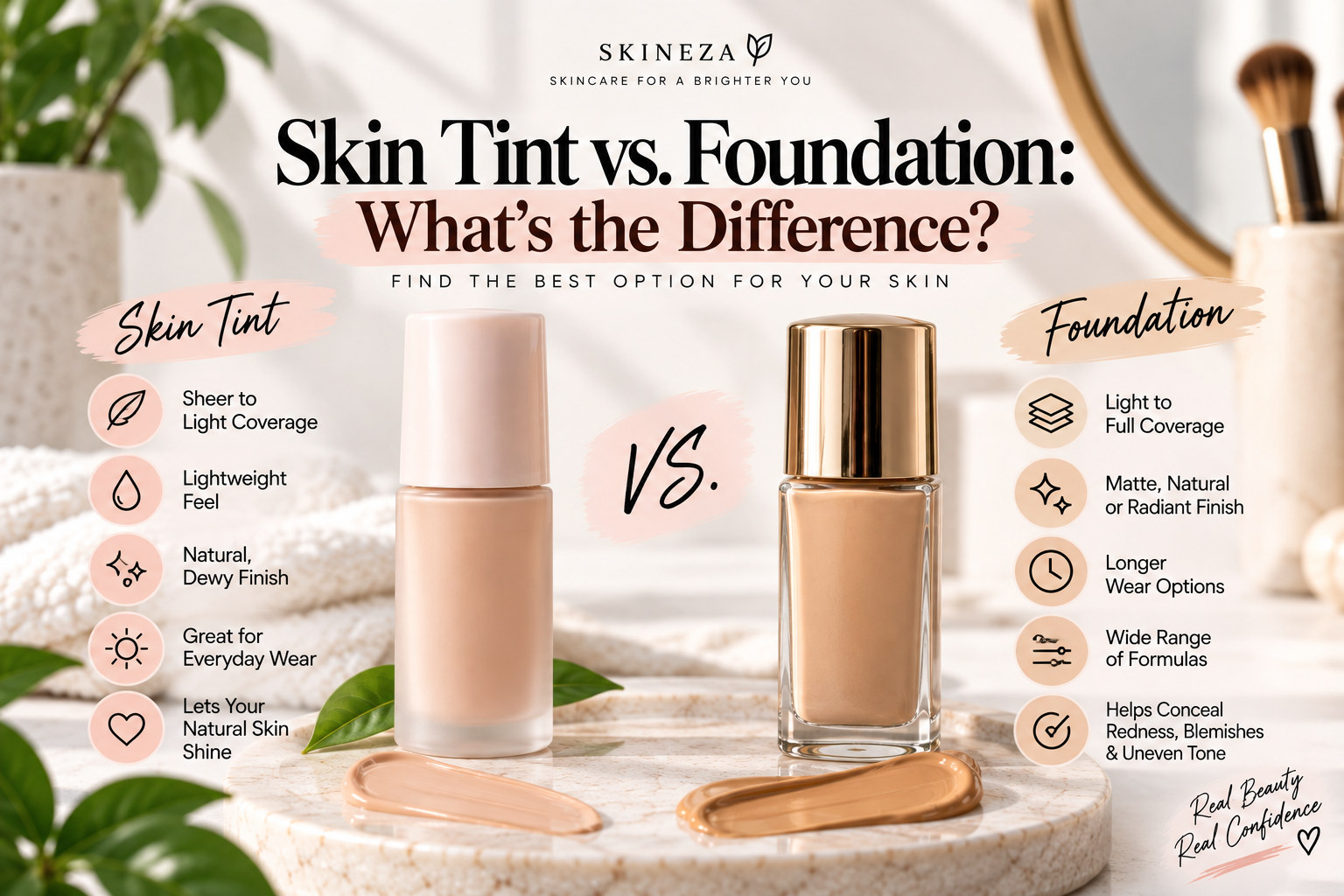
Choosing between a skin tint and foundation can be confusing, especially when both products promise smoother, more even-looking skin. They may look similar in the bottle, but they can create very different results once applied.
The main difference in the skin tint vs. foundation debate comes down to coverage, finish, texture, and how much of your natural skin you want to show. “Before applying your base makeup, following the right skincare routine can help create a smoother-looking finish.”
Skin tints are typically lightweight and sheer, making them a popular choice for natural, everyday makeup. Foundations usually offer more coverage and can be better when you want to conceal redness, uneven tone, blemishes, or discoloration.
But which one is right for you?
This guide breaks down the differences between skin tint and foundation, their pros and cons, and how to choose the best option for your skin type and makeup style.
What Is a Skin Tint?
A skin tint is a lightweight complexion product designed to provide sheer or light coverage while allowing your natural skin to remain visible.
Think of it as a subtle filter rather than a completely new layer of skin.
Skin tints can help even out minor differences in skin tone without creating the more polished appearance associated with traditional foundation.
Depending on the formula, a skin tint may provide:
- Sheer to light coverage
- A natural or dewy finish
- Lightweight texture
- Easy application
- A skin-like appearance
- Hydrating or moisturizing ingredients
Some modern skin tints also contain skincare ingredients such as niacinamide, hyaluronic acid, squalane, or antioxidants.
However, the ingredients and benefits vary considerably between products.
What Is Foundation?
Foundation is a complexion makeup product designed to create a more even-looking base.
Compared with most skin tints, foundation generally provides more pigment and coverage.
Depending on the formula, foundation can provide:
- Light, medium, or full coverage
- Matte, natural, satin, or radiant finishes
- Longer wear
- Greater coverage of redness and discoloration
- More control over the final makeup look
Foundation comes in several forms, including liquid, cream, stick, serum, cushion, and powder formulas.
This variety makes foundation suitable for everything from natural everyday makeup to full-glam looks.
Skin Tint vs. Foundation: What’s the Difference?
So what actually separates these two products?
Here are seven of the biggest differences to consider.
1. Coverage
Coverage is usually the most noticeable difference between skin tint vs. foundation.
Skin Tint
Most skin tints offer sheer to light coverage.
They can help soften the appearance of:
- Minor redness
- Slight discoloration
- Uneven-looking skin tone
However, freckles, blemishes, and natural skin texture will usually remain visible.
That’s part of the appeal.
Foundation
Foundation can range from light to full coverage.
Medium- and full-coverage formulas can provide significantly more coverage for:
- Redness
- Blemishes
- Dark spots
- Uneven tone
- Post-acne marks
Best for natural coverage: Skin tint
Best for more coverage: Foundation
2. Texture and Weight
Skin tint is generally designed to feel lightweight.
Some formulas have a thin, almost serum-like consistency that spreads easily across the face.
Foundation varies much more.
A lightweight serum foundation may feel similar to a skin tint, while a full-coverage cream foundation can feel considerably richer.
If you dislike feeling makeup on your face, a skin tint may be more comfortable for everyday use.
3. Finish
Both products are available in different finishes, but there are some general differences.
Skin tints frequently create a:
- Natural finish
- Dewy finish
- Fresh appearance
- Skin-like glow
Foundation offers considerably more variety.
You can find:
- Matte foundation
- Natural foundation
- Satin foundation
- Radiant foundation
- Luminous foundation
If you want precise control over how matte or luminous your complexion looks, foundation usually gives you more options.
4. Wear Time
Foundation—particularly formulas marketed as long-wearing—typically offers better longevity than a very lightweight skin tint.
That can make foundation useful for:
- Weddings
- Parties
- Long workdays
- Photography
- Special occasions
Skin tint can work beautifully for casual everyday makeup, but longevity depends heavily on the individual formula.
Climate, skin type, skincare underneath, and application technique can also affect wear time.
5. Application
Skin tint is usually very beginner-friendly.
Many formulas can be applied using:
- Clean fingers
- A makeup sponge
- A brush
Because coverage is sheer, small application imperfections are often less noticeable.
Foundation can require slightly more blending, particularly when using medium or full coverage.
For a natural foundation finish, start with a small amount and build coverage only where you need it.
6. Shade Flexibility
Sheer products can sometimes be more forgiving when it comes to shade matching because more of your natural skin remains visible through the product.
Foundation generally requires a more precise match, particularly with medium or full coverage.
When choosing either product, consider both your skin depth and undertone.
Common undertone categories include:
- Warm
- Cool
- Neutral
- Olive
If possible, test complexion products around the jawline rather than only on your hand.
7. Overall Makeup Look
The final difference comes down to what you want your makeup to look like.
Skin tint is great for a:
“My skin, but more even” appearance.
Foundation can create a:
“More perfected and polished complexion” appearance.
Neither is automatically better.
The right choice depends on your desired result.
Skin Tint vs. Foundation Comparison
| Feature | Skin Tint | Foundation |
|---|---|---|
| Coverage | Sheer–Light | Light–Full |
| Feel | Usually very lightweight | Varies by formula |
| Finish | Often natural/dewy | Matte to radiant |
| Skin Visibility | More natural skin shows | Can conceal more |
| Application | Usually simple | May require more blending |
| Shade Match | Often more forgiving | Usually more precise |
| Best Use | Everyday natural makeup | Everyday or full-glam makeup |
| Wear Time | Varies | More long-wear options |
Skin Tint vs. Tinted Moisturizer: Are They the Same?
Not necessarily.
The categories overlap significantly, and brands don’t follow one universal definition.
Traditionally, tinted moisturizer refers to a moisturizing product containing pigment, while skin tint is a broader term for a very lightweight complexion product.
In practice, however, modern skin tints and tinted moisturizers can be extremely similar.
Instead of focusing only on the product name, check:
- Coverage
- Finish
- Ingredients
- Texture
- SPF
- Product directions
Choose based on what the formula actually offers.
Which Is Better for Your Skin Type?
Your skin type can help determine which formulation feels best, but don’t assume everyone with the same skin type needs the same product.
Skin Tint vs. Foundation for Oily Skin
If you have oily skin, you can use either.
Look for skin tints or foundations described as:
- Natural finish
- Soft matte
- Oil-free, if preferred
- Long-wearing
A lightweight skin tint can be comfortable, but some very dewy formulas may become shinier throughout the day.
A matte or natural-finish foundation may provide greater oil control.
Setting powder can also help in areas where you tend to become oily.
Skin Tint vs. Foundation for Dry Skin
Skin tints are often popular among people with dry skin because many have hydrating, luminous formulations.
Look for ingredients commonly found in moisturizing products, such as:
- Glycerin
- Hyaluronic acid
- Squalane
- Ceramides
However, hydrating foundations are also available.
The preparation underneath your makeup matters too.
Start with an appropriate skincare routine and moisturizer before applying complexion makeup.
If you’re unsure how to structure your skincare, read our guide to building a skincare routine for your skin type.
Skin Tint vs. Foundation for Combination Skin
Combination skin can work well with either option.
You might prefer a natural-finish product and apply a small amount of setting powder only to oilier areas such as the forehead, nose, and chin.
There’s no requirement to make your entire face equally matte.
What About Acne-Prone Skin?
Having acne doesn’t automatically mean you need full-coverage foundation. For acne-prone skin, the American Academy of Dermatology recommends choosing makeup products labelled “oil-free” or “non-comedogenic,” meaning they are less likely to clog pores.
Some people prefer letting their skin show through a lightweight tint and using concealer only on individual blemishes.
Others feel more comfortable with medium-coverage foundation.
Both approaches are valid.
If you’re acne-prone, pay attention to how your skin responds to individual formulas and remove your makeup thoroughly before bed.
Avoid aggressively scrubbing your face to remove makeup.
Does Skin Tint Replace Skincare?
No.
Even if a skin tint contains ingredients such as niacinamide, hyaluronic acid, or antioxidants, it doesn’t necessarily replace the other important parts of your skincare routine.
Your basic routine may still include:
Morning:
Cleanser → Moisturizer → Sunscreen → Makeup
Night:
Makeup removal → Cleanser → Treatment, if needed → Moisturizer
For more help with layering, see our guide to the correct order to apply skincare products.
Does Skin Tint Replace Sunscreen?
This deserves special attention.
Some skin tints contain SPF, but relying on makeup alone can make it difficult to apply enough sunscreen to achieve the labeled level of protection.
A safer approach is to use a dedicated broad-spectrum SPF 30 or higher as part of your morning skincare routine and then apply your complexion makeup.
Follow your sunscreen’s directions regarding application and reapplication.
Can You Wear Skin Tint Every Day?
Yes, if your skin tolerates the particular product.
Skin tint is particularly convenient for everyday makeup because it tends to be:
- Lightweight
- Quick to apply
- Easy to blend
- Natural-looking
Remember to remove it properly at the end of the day.
Daily makeup doesn’t mean you need to aggressively cleanse or exfoliate your skin.
Gentle cleansing is usually enough.
Can You Wear Foundation Every Day?
Foundation can also be worn regularly.
There’s no general rule that says wearing foundation every day automatically damages your skin.
The individual formulation, your skin’s response, your cleansing habits, and the rest of your routine matter more.
If a particular foundation consistently causes irritation or seems associated with breakouts, stop using it and consider another formula.
Can You Use Skin Tint and Foundation Together?
Yes, although you usually don’t need to.
One option is to apply skin tint across the entire face and use foundation only where you want additional coverage.
Alternatively, use:
Skin tint → Concealer
This combination can create a natural-looking complexion while providing targeted coverage for blemishes or discoloration.
Avoid layering large amounts of multiple complexion products unless you specifically want heavier coverage.
How to Apply Skin Tint for a Natural Finish
Skin tint doesn’t require a complicated technique.
Step 1: Prepare Your Skin
Start with your normal morning skincare routine.
Allow your moisturizer and sunscreen to settle before applying makeup.
Step 2: Start With a Small Amount
Apply a few small dots of skin tint around your face.
You can always add more.
Step 3: Blend
Use clean fingers, a damp makeup sponge, or a brush.
Blend outward rather than applying a thick layer immediately.
Step 4: Add Concealer Where Needed
Instead of adding several layers of skin tint, use concealer selectively if you want more coverage.
Step 5: Set Where Necessary
If your T-zone becomes oily, apply a small amount of powder only where you need it.
The result should still look like your skin.
How to Apply Foundation Without Looking Cakey
Foundation can look natural when applied strategically.
First, prepare your skin with appropriate skincare.
Then apply a thin layer of foundation, starting around the center of your face.
Blend toward the edges.
Add another small amount only where you want additional coverage.
Heavy foundation combined with too much powder can emphasize texture.
Remember: real skin has texture.
The goal doesn’t have to be creating an airbrushed filter in real life.
Skin Tint vs. Foundation: Which Should You Choose?
Choose skin tint if you:
- Prefer minimal makeup
- Want sheer coverage
- Like seeing your natural skin
- Want a lightweight product
- Prefer a natural or fresh finish
- Need something quick for everyday makeup
Choose foundation if you:
- Want medium or full coverage
- Want to conceal more redness or discoloration
- Need longer-lasting makeup
- Want more control over your finish
- Are preparing for photography or a special event
- Prefer a more polished complexion
And remember—you don’t have to choose only one forever.
You might use skin tint during the week and foundation for special occasions.
Common Skin Tint and Foundation Mistakes
Choosing Coverage Based on Social Media
You don’t need full coverage just because someone online says you do.
Choose the amount of coverage that makes you comfortable.
Using Too Much Product
Start with less.
Adding another thin layer is much easier than fixing a thick, cakey base.
Ignoring Skin Preparation
Makeup tends to apply better when the skin underneath is appropriately moisturized.
Choosing the Wrong Finish
A very matte product may feel uncomfortable on extremely dry skin, while a highly luminous formula might feel too shiny for someone with very oily skin.
Forgetting Sunscreen
Neither foundation nor skin tint should make you forget your daytime sun protection.
Frequently Asked Questions
Is Skin Tint Better Than Foundation?
Neither is universally better. Skin tint is better for sheer, lightweight coverage, while foundation is generally better when you want greater coverage or more control over the final finish.
Is Skin Tint Good for Beginners?
Yes. Its lightweight coverage generally makes skin tint easy to blend and forgiving for beginners.
Does Skin Tint Cover Acne?
Skin tint may reduce the appearance of minor redness, but most formulas won’t completely conceal acne. You can pair skin tint with concealer for targeted coverage.
Is Skin Tint Good for Mature Skin?
A lightweight skin tint can work well for mature skin, but the individual formulation matters more than the product category. Look for a finish and texture that feel comfortable on your skin.
Do I Need Primer Under Skin Tint?
Not necessarily. If your skincare and sunscreen create a smooth base, you may not need primer. Primer can still be useful if you’re targeting a specific concern such as oiliness or makeup longevity.
Can I Apply Skin Tint With My Fingers?
Yes. Many lightweight skin tints can be blended with clean fingers. Brushes and makeup sponges also work.
Can Skin Tint Replace Foundation?
If you’re happy with sheer or light coverage, absolutely. If you want significant coverage, traditional foundation may be more suitable.
Final Thoughts
The skin tint vs. foundation decision is ultimately about the kind of makeup finish you want.
A skin tint is ideal when you want lightweight, sheer coverage that allows freckles, texture, and natural skin to remain visible.
A foundation is the stronger choice when you want greater coverage, longer wear, or more control over whether your complexion looks matte, satin, natural, or radiant.
You can even keep both in your makeup collection and choose depending on the day.
For casual mornings, a skin tint with targeted concealer can create a quick, fresh look. For events or days when you want additional coverage, foundation gives you more flexibility.
The best complexion product isn’t the one with the most coverage.
It’s the one that makes your skin look the way you want it to look.