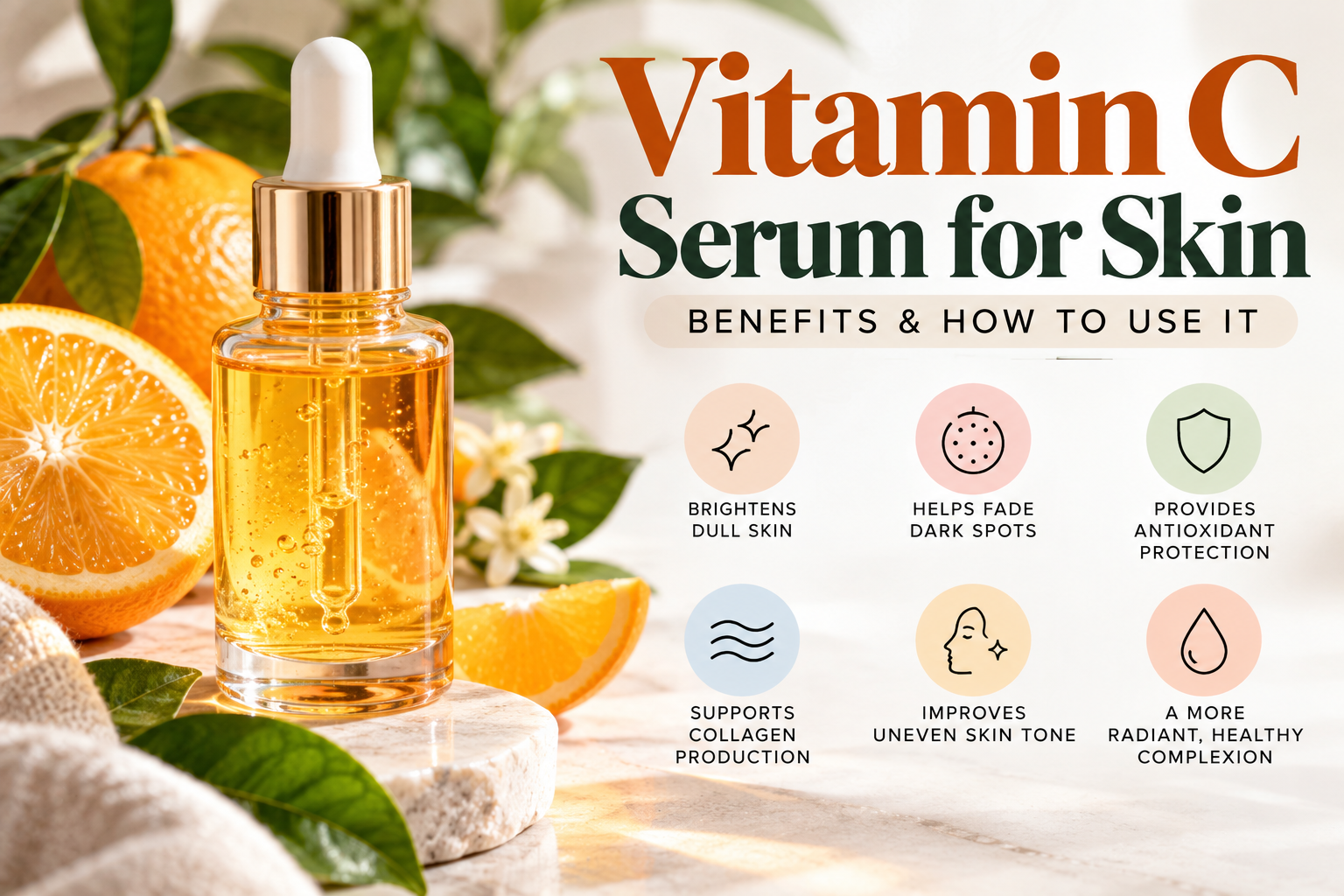
Vitamin C is one of the most popular ingredients in modern skincare, particularly for people concerned about dullness, uneven-looking skin tone, dark spots, and visible signs of sun damage.
A well-formulated vitamin C serum for skin can provide antioxidant support and may help brighten the appearance of the complexion while supporting collagen production.
But vitamin C products aren’t all the same. The type of vitamin C, concentration, formulation, packaging, and the rest of your skincare routine can all affect how well a product works for you.
In this guide, we’ll cover the main vitamin C serum benefits, how to use vitamin C serum, when to apply it, which ingredients you can combine it with, and common mistakes to avoid.
What Is Vitamin C Serum?
Vitamin C serum is a topical skincare product containing vitamin C or a vitamin C derivative.
One of the most researched forms is L-ascorbic acid, the biologically active form of vitamin C.
Skincare products may also contain vitamin C derivatives such as:
- Sodium ascorbyl phosphate
- Magnesium ascorbyl phosphate
- Ascorbyl glucoside
- Tetrahexyldecyl ascorbate
These ingredients differ in stability, formulation requirements, and the amount of research supporting their effects.
A vitamin C serum for skin is commonly used as part of a morning skincare routine because of its antioxidant properties.
7 Vitamin C Serum Benefits for Skin
1. Provides Antioxidant Support
One of the most important vitamin C serum benefits is antioxidant activity.
Your skin is exposed to environmental factors such as ultraviolet radiation and pollution that can contribute to oxidative stress.
Topical vitamin C can help neutralize free radicals.
However, vitamin C serum does not replace sunscreen.
Think of vitamin C and sunscreen as complementary parts of a morning skincare routine rather than alternatives.
2. May Help Brighten Dull-Looking Skin
Vitamin C is frequently included in brightening skincare products.
With consistent use, a vitamin C serum for face may help make dull-looking skin appear brighter and more radiant.
If your complexion looks tired or uneven, vitamin C can be one ingredient to consider as part of a balanced routine.
Results aren’t instantaneous, so consistency is important.
3. May Improve the Appearance of Dark Spots
Another reason people use vitamin C for skin is uneven pigmentation.
Vitamin C can interfere with processes involved in melanin production, which may help improve the appearance of certain forms of hyperpigmentation over time.
This makes vitamin C popular for concerns such as:
- Uneven-looking skin tone
- Post-acne marks
- Sun-related discoloration
- Dullness
However, dark spots can have different causes.
Persistent or changing pigmentation should be evaluated by a dermatologist.
4. Supports Collagen Production
Vitamin C plays an important biological role in collagen synthesis.
Collagen is a structural protein that helps provide strength and support to the skin.
Because of this, topical vitamin C is commonly included in skincare routines targeting visible signs of aging.
Consistent use may help improve the appearance of fine lines and overall skin quality, although no serum can permanently stop skin aging.
5. May Help Improve the Appearance of Fine Lines
Because vitamin C supports collagen-related processes and provides antioxidant activity, it may help improve the appearance of fine lines over time.
A good anti-aging routine should not rely on vitamin C alone.
Other important components include:
- Daily sunscreen
- Moisturizer
- Appropriate retinoids when suitable
- Gentle cleansing
- Consistent skincare habits
6. Can Help Create a More Even-Looking Skin Tone
A combination of dullness, sun damage, and post-acne marks can make the complexion look uneven.
Regular use of a well-formulated vitamin C serum for skin may gradually help the skin appear more even and radiant.
Daily sun protection is especially important if uneven pigmentation is one of your concerns.
7. Works Well in a Morning Skincare Routine
Vitamin C is especially popular in morning routines because antioxidants can complement sunscreen and other sun-protective measures.
A simple routine can be:
Cleanser → Vitamin C Serum → Moisturizer → Sunscreen
You don’t need numerous additional serums unless they address a specific concern.
How to Use Vitamin C Serum
Knowing how to use vitamin C serum correctly can help you get the benefits without unnecessarily complicating your routine.
Step 1: Cleanse Your Skin
Start with a gentle facial cleanser appropriate for your skin type.
Pat your skin dry without aggressive rubbing.
Step 2: Apply Vitamin C Serum
Apply your vitamin C serum according to the product directions.
You generally don’t need a large amount.
Follow the manufacturer’s recommended amount rather than assuming that more product will produce faster results.
Step 3: Apply Moisturizer
After your serum, apply a moisturizer appropriate for your skin type.
Moisturizer can help support your skin barrier and reduce dryness.
Step 4: Apply Sunscreen
Finish your morning routine with a broad-spectrum, water-resistant sunscreen with SPF 30 or higher on exposed skin.
This step is especially important when your goal is preventing or improving the appearance of sun-related discoloration.
When to Use Vitamin C Serum
A common question is whether vitamin C should be used in the morning or at night.
Vitamin C in the Morning
Morning is a popular time to use vitamin C because its antioxidant properties complement a sun-protection routine.
Try:
Cleanser → Vitamin C → Moisturizer → Sunscreen
Vitamin C at Night
Vitamin C can also be used at night if that works better with your routine or product directions.
However, if you’re already using strong nighttime treatments such as retinoids or exfoliating acids, keeping vitamin C in your morning routine may make your schedule simpler.
Can You Use Vitamin C Serum Every Day?
Many vitamin C serums are formulated for daily use.
However, frequency depends on:
- The specific formulation
- Vitamin C concentration
- Your skin sensitivity
- Other active ingredients you’re using
If you’re a beginner or have sensitive skin, consider introducing the product gradually.
You don’t need to force daily use if your skin becomes irritated.
Vitamin C Serum for Dark Spots
Using vitamin C serum for dark spots is one of the ingredient’s most popular applications.
Vitamin C may help reduce the appearance of some types of hyperpigmentation over time.
However, sunscreen is essential.
Without consistent sun protection, UV exposure can contribute to new discoloration and make existing pigmentation more noticeable.
A basic morning routine for uneven skin tone could be:
Gentle Cleanser → Vitamin C Serum → Moisturizer → SPF 30+ Sunscreen
Vitamin C Serum for Acne-Prone Skin
Vitamin C is not a primary acne medication.
It shouldn’t replace treatments such as salicylic acid, benzoyl peroxide, or prescription acne medications when those treatments are appropriate.
However, a vitamin C serum for acne-prone skin may be useful when your concern includes post-acne discoloration or uneven-looking skin tone.
Choose a formulation appropriate for your skin type and introduce it carefully if you’re already using multiple acne treatments.
Vitamin C Serum for Oily Skin
People with oily skin can use vitamin C.
Look for lightweight serum formulations that don’t feel excessively heavy or greasy.
If you’re acne-prone, you may also prefer products labeled non-comedogenic.
Remember that the complete formulation matters—not just the vitamin C itself.
Vitamin C Serum for Dry Skin
Dry skin can also benefit from vitamin C, but hydration should remain an important part of your routine.
Follow your vitamin C serum with a moisturizer containing ingredients such as:
- Ceramides
- Glycerin
- Hyaluronic acid
- Squalane
If your skin barrier is already irritated, consider simplifying your routine before introducing additional active ingredients.
Vitamin C Serum for Sensitive Skin
Sensitive skin requires a little more caution.
L-ascorbic acid formulations can sometimes cause:
- Stinging
- Redness
- Dryness
- Irritation
If you’re sensitive, you may prefer starting with a gentler formulation or introducing the product less frequently.
Patch testing can also be useful before applying a new product to your entire face.
Vitamin C and Sunscreen
Vitamin C and sunscreen make a particularly useful morning combination.
Vitamin C provides antioxidant support, while sunscreen helps protect against ultraviolet radiation.
Vitamin C does not make sunscreen optional.
A simple morning routine is:
Vitamin C Serum → Moisturizer → Broad-Spectrum SPF 30+ Sunscreen
Reapply sunscreen according to the product directions, particularly when spending extended time outdoors.
Can You Use Vitamin C and Niacinamide Together?
Yes, vitamin C and niacinamide can generally be used in the same skincare routine.
The old idea that these two ingredients must never be combined is not a useful rule for modern skincare formulations.
You might use:
Cleanser → Vitamin C → Niacinamide → Moisturizer → Sunscreen
But you don’t necessarily need separate serums for both ingredients.
Some products already contain multiple beneficial ingredients.
If you’re interested in niacinamide, read our complete guide to niacinamide for skin.
Can You Use Vitamin C and Retinol Together?
Vitamin C and retinol can both exist within an overall skincare routine.
However, people with sensitive skin may find using several active ingredients together irritating.
One simple option is:
Morning: Vitamin C → Moisturizer → Sunscreen
Night: Retinol → Moisturizer
Separating the ingredients can make your routine easier to manage.
If you’re new to retinoids, read our Retinol for Beginners guide first.
Can You Use Vitamin C With Tretinoin?
If you’re using prescription tretinoin, your prescriber’s instructions should take priority.
Some people use vitamin C in the morning and tretinoin at night.
For example:
Morning: Vitamin C → Moisturizer → Sunscreen
Night: Tretinoin → Moisturizer, according to your prescription instructions.
Our Retinol vs. Tretinoin guide explains the differences between these two retinoids.
Can You Use Vitamin C With Ceramides?
Yes.
Vitamin C and ceramides perform different functions and can fit comfortably into the same routine.
Vitamin C provides antioxidant benefits, while ceramides help support the skin barrier.
For example:
Cleanser → Vitamin C Serum → Ceramide Moisturizer → Sunscreen
You can learn more in our guide to ceramides for skin.
Can You Use Vitamin C With Hyaluronic Acid?
Yes.
Hyaluronic acid is primarily a hydrating ingredient, while vitamin C provides antioxidant benefits.
They can be used within the same routine.
Depending on your products, you might use:
Cleanser → Vitamin C → Hyaluronic Acid → Moisturizer → Sunscreen
Always consider product texture and manufacturer instructions when deciding the exact order.
Can You Use Vitamin C With Salicylic Acid?
Both ingredients can exist within the same overall routine, but using multiple active ingredients can sometimes cause irritation.
If you have sensitive skin, you might prefer:
Morning: Vitamin C
Night: Salicylic acid
This isn’t mandatory, but separating them can make it easier to determine how your skin responds.
Vitamin C vs. Niacinamide
Both ingredients can be useful for uneven-looking skin, but they work differently.
Vitamin C
Best known for:
- Antioxidant activity
- Brightening
- Supporting collagen production
- Improving the appearance of uneven pigmentation
Niacinamide
Commonly used for:
- Supporting the skin barrier
- Improving the appearance of uneven skin tone
- Supporting oily or acne-prone skincare routines
- Improving overall skin appearance
You don’t necessarily need to choose one.
They can often be used together.
Vitamin C vs. Retinol
Vitamin C vs. retinol is another common comparison.
They aren’t direct substitutes.
Vitamin C is primarily an antioxidant and brightening ingredient.
Retinol is a retinoid used to improve signs of skin aging, texture, and other concerns.
Many people use:
Vitamin C in the morning
and
Retinol at night.
This is a simple way to incorporate both without putting too many active products into one routine.
How to Choose a Vitamin C Serum
Choosing the best vitamin C serum for your skin involves more than looking for the highest percentage.
Look at the Type of Vitamin C
L-ascorbic acid has substantial research behind it, while vitamin C derivatives may offer different stability and tolerability characteristics.
Consider Concentration
More isn’t always better.
Higher concentrations may increase irritation without necessarily being appropriate for your skin.
Beginners and sensitive skin types don’t need to immediately choose the strongest product available.
Pay Attention to Packaging
Vitamin C—especially L-ascorbic acid—can be unstable when exposed to light, air, and heat.
Packaging designed to limit exposure can help preserve the formulation.
Consider the Entire Formula
A product’s effectiveness and tolerability depend on more than one ingredient.
Look at the full formulation rather than buying solely because “Vitamin C” appears prominently on the label.
How to Store Vitamin C Serum
Proper storage is important because some vitamin C formulations can oxidize.
Keep your serum:
- Properly closed
- Away from direct sunlight
- Away from excessive heat
- According to the manufacturer’s storage instructions
Don’t leave the bottle sitting open for long periods.
How Do You Know if Vitamin C Serum Has Oxidized?
Vitamin C products—particularly L-ascorbic acid formulations—may change color as they oxidize.
A significant change to dark orange or brown may indicate substantial oxidation, depending on the original formulation.
Because products naturally vary in color, compare your serum with the manufacturer’s guidance rather than relying on one universal color rule.
If the product has changed significantly in appearance, smell, or texture, check the brand’s instructions or consider replacing it.
Common Vitamin C Serum Mistakes
Avoid these common mistakes:
Using Too Much
More serum won’t necessarily produce faster results.
Skipping Sunscreen
Vitamin C complements sunscreen—it doesn’t replace it.
Starting Too Many Active Ingredients Together
Introducing vitamin C, retinol, exfoliating acids, and acne treatments simultaneously can make irritation difficult to troubleshoot.
Choosing the Highest Concentration
Stronger doesn’t automatically mean better.
Using an Oxidized Product
Pay attention to significant changes in color, smell, or texture.
Expecting Overnight Results
Brightening and improvements in uneven-looking pigmentation require consistent skincare and patience.
Possible Vitamin C Serum Side Effects
Topical vitamin C is generally well tolerated, but some people may experience:
- Redness
- Stinging
- Dryness
- Itching
- Irritation
Sensitive skin may be more likely to react to certain formulations.
Stop using the product if you develop significant irritation. Persistent or severe reactions should be evaluated by a healthcare professional.
Frequently Asked Questions
What does vitamin C serum do for skin?
Vitamin C provides antioxidant activity and may help brighten the complexion, improve the appearance of uneven pigmentation, and support collagen production.
When should I use vitamin C serum?
Vitamin C is commonly used in the morning before moisturizer and sunscreen, although some products can also be used at night.
Can I use vitamin C serum every day?
Many vitamin C serums are designed for daily use, but frequency should depend on your product instructions and skin tolerance.
Does vitamin C serum help dark spots?
Vitamin C may help improve the appearance of certain forms of hyperpigmentation over time. Consistent sun protection is important when addressing dark spots.
Can I use vitamin C and niacinamide together?
Yes. Modern vitamin C and niacinamide products can generally be used within the same skincare routine.
Can I use vitamin C with retinol?
Yes. A simple approach is using vitamin C in the morning and retinol at night, particularly if you’re concerned about irritation.
Should vitamin C go before or after moisturizer?
A vitamin C serum is generally applied before moisturizer, but follow the directions for your specific formulation.
How long does vitamin C serum take to work?
There is no universal timeline. Visible results depend on the formulation, concern being treated, consistency, and your individual skin.
Final Thoughts
A vitamin C serum for skin can be a useful addition to a routine focused on antioxidant protection, dullness, uneven-looking skin tone, dark spots, and visible signs of skin aging.
Some of the most notable vitamin C serum benefits include antioxidant support, brighter-looking skin, support for collagen production, and improvement in the appearance of certain types of pigmentation.
Learning how to use vitamin C serum doesn’t need to be complicated.
For many people, a simple morning routine works well:
Cleanser → Vitamin C Serum → Moisturizer → Sunscreen
Choose a formulation that suits your skin, introduce it gradually if necessary, and remember that consistent sun protection remains one of the most important parts of any skincare routine.